“10 Common Myths About Disaster Preparedness”
When disaster strikes, the myths we believe can leave us unprepared thus leaving us vulnerable, helpless, and scared. We’ve all heard the advice, “Just grab what you can and go”, But is that enough to protect us from the unknown?
Myth #1: Disasters only happen to other people, never to me, But Mother Nature cares not for your self-appointed immunity.
Truth #1: Disasters can happen to anyone, regardless of their beliefs or opinions. Natural disasters such as hurricanes, floods, earthquakes, and wildfires can strike at any time and in any place, and no one is immune to their effects.
It’s important to understand that while you may not be able to prevent a disaster from happening, you can take steps to prepare for one. I’ve seen first hand how natural disasters do not stop to ask who you voted for, what religion you are (or are not) or if you are up to date on the latest vaccine. She’s a ruthless force with no limits to the chaos she can cause when on a rampage. Check out how to determine your risks here.
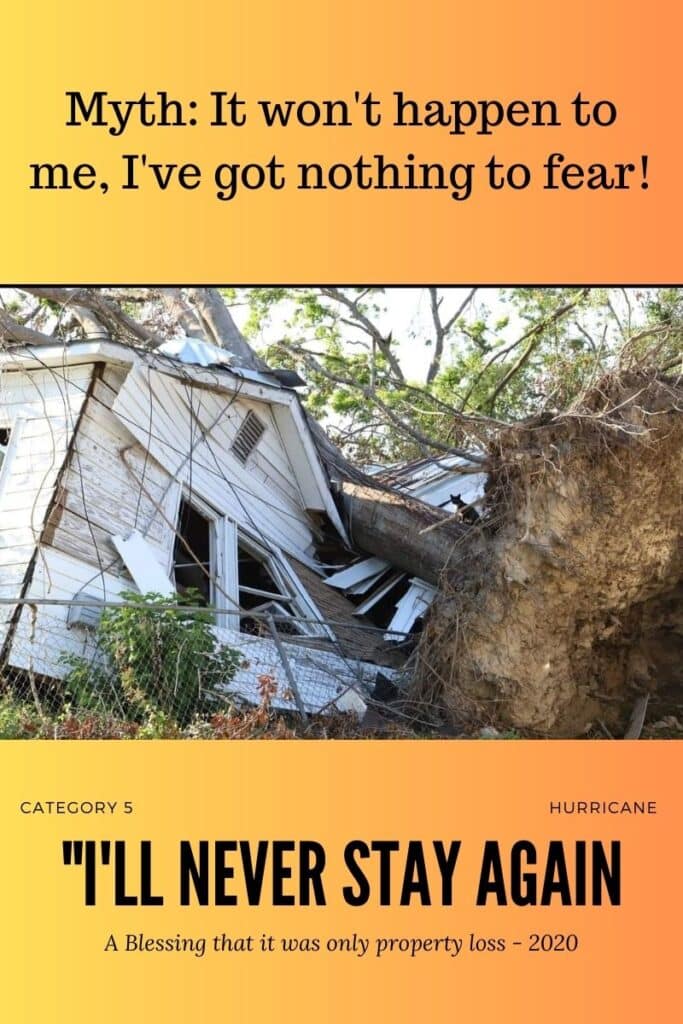
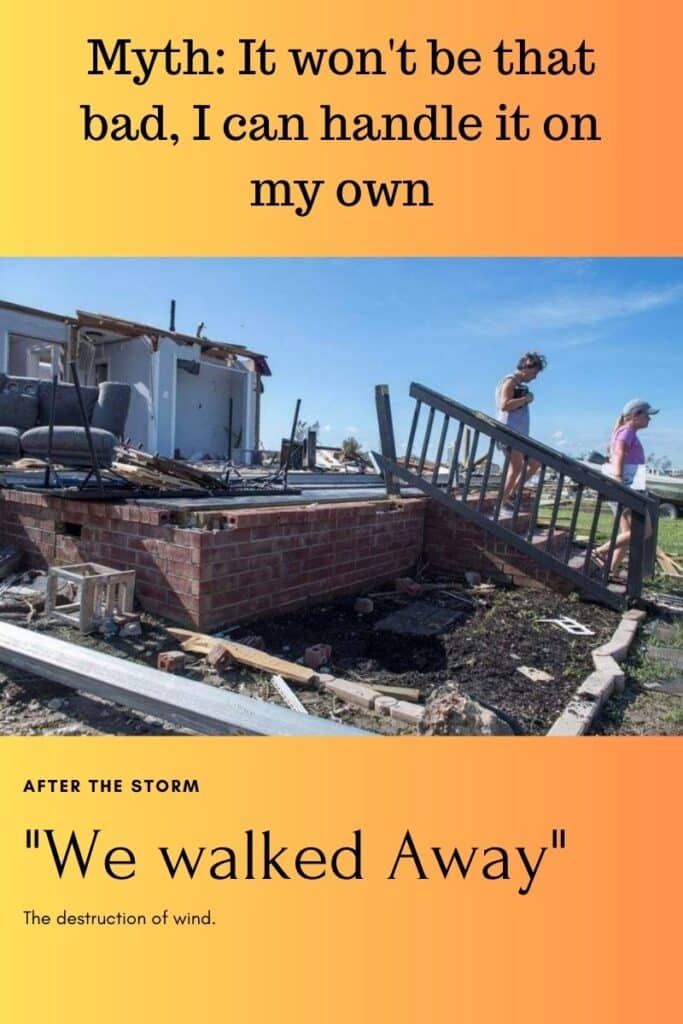
Myth #2: It won’t be that bad, I can handle it on my own, But disaster knows no bounds, and we are never truly alone.
Fact #2: You could be absolutely correct in that assumption yet at the same time it could be the difference between life and death. If you look at the death tolls in the last five years due to natural disasters just in the USA the numbers are depressing. I have heard story after story about how a person has lived through this number or that number of events and it was nothing major. Then the BIG one hits and they are staring at the stars floating on the mattress in the darkness of their bedroom with a tree blocking the doorway praying someone is able to get to them before they perish from the conditions.
One of my biggest haunts that will stay with me indefinitely came from Hurricane Ian. A captain decided he would ride out the storm on his boat as he had done before safe in the marina. He stayed in contact with his family as the massive Category Five Storm approached land. The last contact was that he would call in a few hours when the storm passed. Unfortunately more than 4 months after the storm (October to January) the vessel was finally located sunken 2 miles from where is originated from with the Captains remains later identified still on board.
Myth #3: Emergency kits are a waste of time and money.
Fact #3: In times of chaos, those kits are what keep us alive and sunny. Truthfully you don’t have to go full throttle on an emergency kit. You have those that are resilient and have a huge network resulting in them not needing a lot of extra’s for when SHTF and those that spend under $100 and get gear set up and ready to go. Having supplies prepared for at least 3 days for each person under your roof and any 4 legged family members can make the difference between minor discomfort and unbearable conditions.
Myth #4: I don’t need a plan, I’ll just wing it as I go. But in the face of danger, instincts can falter, and chaos can grow.
Fact #4: During stressful or emotional situations, the body’s fight-or-flight response can be triggered, leading to increased levels of adrenaline and cortisol. This can cause physical sensations such as increased heart rate, sweating, and rapid breathing, which can make it difficult to concentrate on tasks. With the increased stress the mind may become preoccupied with the source of the stress, making it challenging to focus on other things. Negative emotions such as anxiety, sadness and anger can impact a person’s ability to concentrate. Not having access to the normal daily activities and no way to access basic needs is extremely distressing for most.
Myth #5: I’ll just wait for help to come and save me, But in times of crisis, every second can mean the difference between safe and free.
Fact #5: Emergency crews strive to respond promptly and efficiently during natural disasters to provide assistance and support to those in need. However, there may be situations when emergency crews cannot respond immediately or at all, depending on the severity of the disaster and the conditions on the ground.
In some cases, natural disasters may be so severe that they overwhelm the capacity of emergency response teams to provide aid to all affected areas. This can occur when multiple disasters occur simultaneously, such as when hurricanes or earthquakes cause widespread destruction across large areas.
Additionally, severe weather conditions such as high winds, flooding, or snowstorms can make it unsafe for emergency crews to travel and provide assistance. In such cases, responders may have to wait until the conditions improve before they can reach affected areas. There are set criteria for when emergency crews can respond in relation to wind speeds of a storm. At a set point all emergency crews must stand down until the weather improves before they can resume responding.
Infrastructure damage, such as collapsed buildings or bridges, can also make it challenging for emergency crews to access affected areas and provide assistance. During the recent Flood in Kentucky numerous roads and bridges were washed out and there was no way to reach those people until it was safe to cross using boats or 4 wheelers.
Furthermore, emergency responders may not be able to respond during a natural disaster if they themselves are affected by the disaster. They may be injured, trapped, or displaced, preventing them from providing aid. If you are in the line of the storm your closest emergency responders may be as well and un able to assist immediately relying on resources from further away delaying the response to get to you.
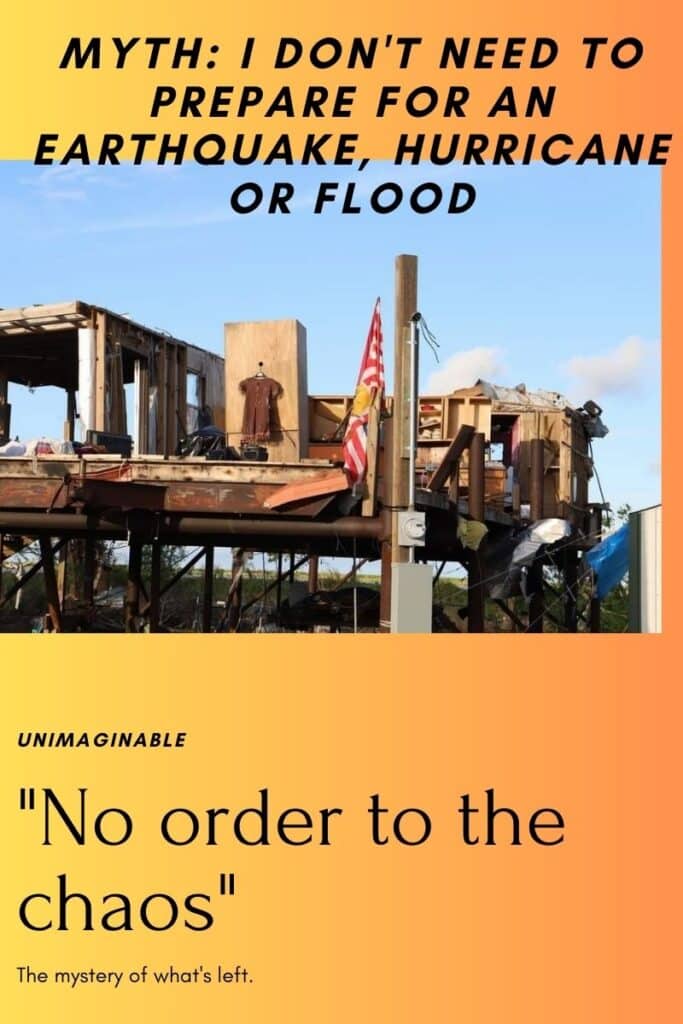
Myth #6: I don’t need to prepare for an earthquake, hurricane or flood, But even the most stable of homes can crumble in a flash of mud.
Fact #6: Even the most stable homes can become unstable in a storm. Despite the sturdiness of a house, severe weather conditions such as hurricanes, tornadoes, or floods can cause significant damage to even the most well-built structures.
High winds can tear roofs off homes, rip apart siding, and shatter windows. Heavy rain can flood basements and cause water damage to walls and floors. In extreme cases, storm surges can cause entire houses to be swept away by the force of the water.
Even homes that are not directly impacted by severe weather can be affected by power outages, road closures, and supply chain disruptions, making it difficult to access necessities such as food, water, and medical supplies.
The instability of a home during a storm can also be compounded by the emotional toll that such events can take on individuals and families. The fear and uncertainty that come with severe weather can make it difficult to feel safe and secure even in a stable structure.
Myth #7: I have insurance, that’s all I need to be safe, But a policy cannot protect you from the aftereffects of the quake.
Fact #7: Home insurance can provide valuable financial support to homeowners who experience damage to their property due to natural disasters such as hurricanes, floods, or earthquakes. However, it is important to understand that not all costs related to repairs will be covered by insurance.
Insurance policies may have limitations and exclusions that can affect the amount of coverage available for certain types of damage or repairs. For example, some policies may exclude coverage for damage caused by floods or earthquakes, or have limits on the amount of coverage available for certain types of repairs.
Additionally, insurance policies may have deductibles that homeowners are responsible for paying out of pocket before insurance coverage kicks in. This can be a significant expense for homeowners who experience costly repairs after a natural disaster.
Even with insurance coverage, there may be additional expenses that are not covered by insurance, such as the cost of temporary housing while repairs are being made, or the cost of replacing personal belongings that were lost or damaged in the disaster.
To ensure that they are prepared for the potential costs of repairs after a natural disaster, homeowners may want to consider purchasing additional coverage or increasing their coverage limits. It is also important to review insurance policies regularly and understand what is covered and what is not, so that homeowners can make informed decisions about their insurance needs.
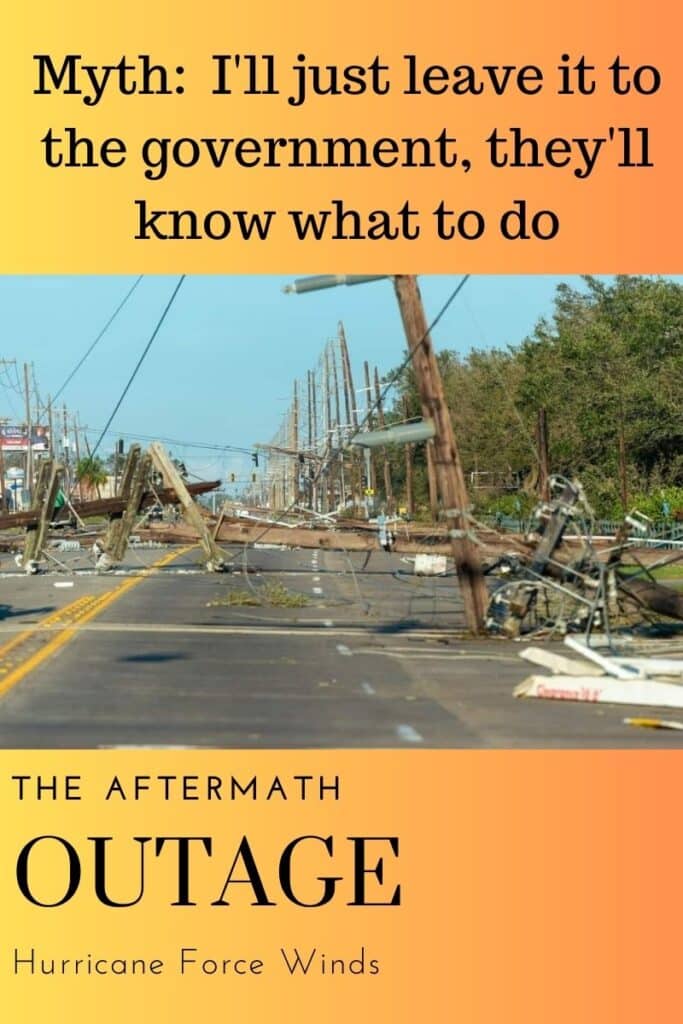
Myth #8: I’ll just leave it to the government, they’ll know what to do, But in times of disaster, it’s up to us to see ourselves through.
Fact #8: The government has a hierarchy to how they can respond. There are a variety of declarations that must be made before certain types of assistance is provided. There can be a delay in getting resources on the ground to those that need help. Critical needs will be the priority and they will work to get the movement started. Organizations like FEMA may have a overwhelming process that the elderly population may not have access to, Shelters take time and approval to get running and adaquately stocked with supplies and people to run them.
There are numerous Non Profit Organizations that will step in and provide relief as quickly as possible but depending on the government agencies to bail you out is not a solid and reliable plan in response to an emergency situation.
Myth #9: I’ll just follow the crowd, they must know where to go, But in a sea of panicked people, chaos can grow and grow.
In situations where there is a need for quick and decisive action, following the crowd can lead to a loss of agency and a lack of preparedness. In some cases, the crowd may be following outdated or incorrect information, or may be heading in a direction that is not safe or appropriate. Additionally, following the crowd can sometimes lead to a loss of individuality and a failure to take responsibility for one’s own actions.
To be truly resilient, individuals need to be able to think critically and make decisions based on their own assessments of the situation. This involves taking responsibility for one’s own safety and well-being, and being prepared to take action when necessary. While it can be useful to take cues from others in certain situations, it is important to maintain a sense of agency and independence, and to be prepared to act based on one’s own assessment of the situation.
Myth #10: It won’t happen to me, I’ve got nothing to fear, But it’s better to be safe than sorry, to prepare before disaster is near.
Fact #10 – See 1-9 above. Unfortunately it is impossible to avoid the risk of emergency situations happening. Even if you live somewhere without the risk of severe weather there are other situations that you can be effected by. The Pandemic effected everyone due to supply chain issues, job loss, school
So let us debunk these myths and face the truth head-on, Disaster preparedness is key, it cannot be undone. It takes time, effort, and planning to ensure we are ready, But the peace of mind it brings is worth it, steady and steady.